If you are planning to see doctor in China, understanding the evolving landscape of imported medications is crucial. Since the launch of the “4+7” pilot in 2018, China’s Volume-Based Procurement (VBP) policy has dramatically reshaped the pharmaceutical market. By 2025, with the 11th round of procurement targeting 700 varieties, the availability of original imported drugs in public hospitals has shifted significantly, directly impacting choices for international patients seeking to see doctor in China.
The Current Landscape in Public Hospitals
The VBP policy, designed to exchange volume for lower prices, has successfully reduced costs but led some multinational pharmaceutical companies to withdraw original drugs from the public hospital market due to pricing pressures. In the 10th procurement round, notable medications like Januvia (Merck) and Linezolid (Pfizer) failed to win bids. Recent 2025 data indicates that over 30 original drugs have applied for market withdrawal, making it increasingly challenging for patients to access specific imported medicines within standard public hospital wards when they see doctor in China.
Policy Shifts Create New Opportunities
However, a significant turnaround is underway. The 2025 procurement guidelines are transitioning from a “lowest price only” approach to prioritizing “quality first.” The 11th round explicitly states that “new drugs are exempt from bulk procurement,” and introduces a mechanism allowing hospitals to report volumes by brand. Crucially, health authorities have clarified that hospitals are not mandated to use only procured drugs; they retain autonomy to purchase non-winning medications beyond agreed quotas. This policy optimization creates a vital pathway for imported drugs to return to public hospitals, offering more stability for those who need to see doctor in China for chronic conditions.
Diverse Pathways for Foreign Patients
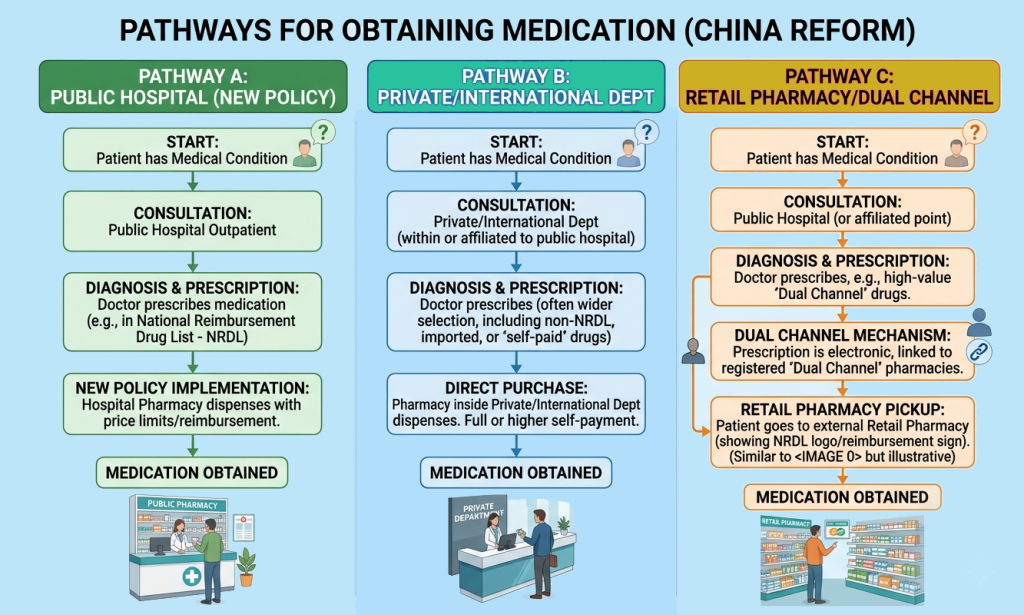
Given these market dynamics, foreign patients have several effective channels to secure necessary medications:
- The Out-of-Hospital Market: Original drugs are rapidly shifting to retail pharmacies, e-commerce platforms, and private clinics. Sales data shows that for certain imported medicines, out-of-hospital channels now surpass hospital sales. The “Dual Channel” policy further facilitates this by allowing patients to obtain prescriptions in hospitals and fill them at designated pharmacies.
- International Departments & Private Hospitals: Major public hospitals with International Medical Departments and high-end private facilities typically maintain robust stocks of imported drugs, specifically catering to the unique needs of expatriates. These are often the preferred destinations when you see doctor in China for specialized or continuity care.
- Insurance and Category C Lists: In 2025, the National Healthcare Security Administration announced an expansion of the “Category C” directory, covering many imported and innovative drugs. Foreign patients can leverage commercial health insurance to cover these costs, significantly reducing out-of-pocket expenses.
Practical Advice for Your Journey
Before you travel to see doctor in China, it is advisable to consult professional platforms like seedoctorinchina.com to verify the drug formulary of your target hospital. For patients on long-term medication, bring complete medical records and translated prescriptions to help doctors evaluate alternatives or maintain your current regimen. Additionally, securing commercial insurance that covers imported drugs is a strategic move to navigate changes under the procurement policy smoothly.
By understanding these shifts and utilizing the right channels, foreign patients can ensure seamless access to high-quality healthcare and necessary medications while in China.